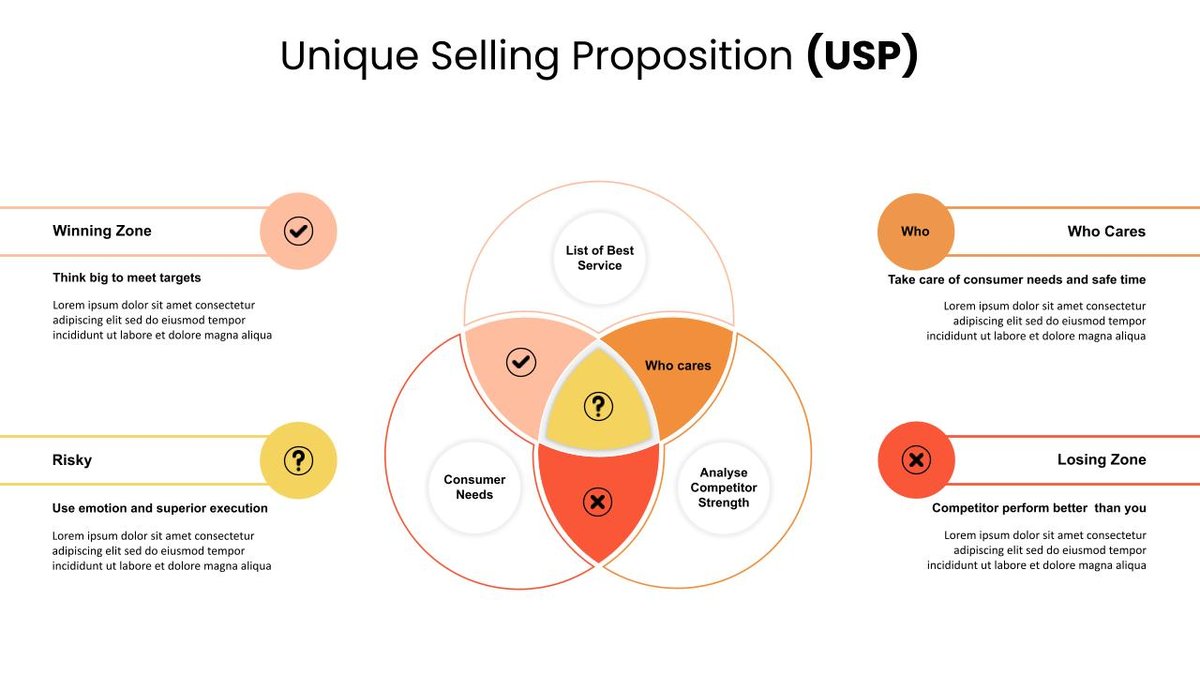
It's no secret that consumers today are savvier, more discerning, and utterly bombarded with choices. In this competitive landscape, simply having a great product or service isn't enough; you need to articulate why it's great for them. This is where the power duo of Price Point & Value Proposition steps in, communicating precisely why customers should choose you over everyone else vying for their attention and dollar.
Think of it this way: your price point is a number, but your value proposition is the story, the promise, the undeniable reason that number feels right—or even like a steal. It's the engine that drives purchase decisions, customer loyalty, and ultimately, your business's success.
At a Glance: Your Guide to Mastering Price Point & Value Proposition
- It's Your Core "Why": A value proposition concisely explains unique benefits, solves specific problems, and highlights your superiority.
- Not Just a Mission Statement: While a mission statement defines your company's purpose, a value proposition is purely customer-focused: "What's in it for me?"
- Key Elements: It must be specific, address customer pain points, and showcase your exclusive competitive advantage.
- Layers of Value: Propositions exist at primary (brand-wide), segment, product, and process levels, each tailored for impact.
- Crafting Success: It's a strategic process involving deep customer understanding, competitive analysis, and clarity over cleverness.
- Test, Don't Guess: Validate your value proposition with A/B testing, surveys, and analytics to ensure it truly resonates.
- An Ongoing Journey: Your value proposition isn't set in stone; it needs regular monitoring and retesting to stay relevant.
Why Your Value Proposition is Your Most Crucial Sales Tool
In an increasingly crowded marketplace, a compelling value proposition isn't just nice to have; it's essential for survival and growth. It's the immediate answer to a customer's unspoken question: "Why should I care about this?" Without a strong, clear, and compelling answer, even the most innovative product can languish.
A well-crafted value proposition serves multiple critical functions:
- Attracts the Right Customers: It cuts through the noise, drawing in individuals who genuinely need and appreciate what you offer.
- Increases Conversion Rates: When customers immediately grasp your worth, they're far more likely to take the desired action, whether it's making a purchase or signing up for a trial.
- Guides Product Development: By focusing on the core value you promise, you can ensure your product evolution stays aligned with customer needs and market differentiation.
- Boosts Marketing Effectiveness: It provides the foundational message for all your marketing campaigns, ensuring consistency and impact across every channel.
- Secures Investment: For startups and growing businesses, a clear value proposition demonstrates market understanding and potential for success to investors.
Crucially, a value proposition differs significantly from a mission statement. While a mission statement defines your company's existence and what it stands for, a value proposition is intensely customer-focused. It's about solving their problems and enriching their lives, rather than just stating your internal aspirations.
The Anatomy of an Irresistible Value Proposition
So, what makes a value proposition truly compelling—the kind that makes customers lean in and say, "Tell me more"? It boils down to a few core elements:
- Specificity Over Generality: Your value proposition shouldn't be vague. Instead, it must clearly articulate the precise benefits customers will receive. Think beyond mere features and focus on the "superpowers" your product or service grants them. What tangible outcomes can they expect?
- Laser Focus on Pain Points: People buy solutions, not products. A successful value proposition explains how you fix a customer's problem or significantly improve their life. This means addressing both the practical challenges and the underlying psychological benefits. Do you save them time, reduce stress, enhance their status, or provide peace of mind?
- Undeniable Exclusivity: Why you? Your value proposition must highlight your competitive advantage, demonstrating why you are not only desirable but superior to alternatives. This often incorporates a unique selling proposition (USP) that sets you apart.
In essence, a powerful value proposition explicitly covers: the promise of what will be delivered, the benefits customers will reap, and the reasons they should choose your business over all others.
Beyond the Brand: Different Layers of Value Propositions
While you might have an overarching brand promise, value propositions can and should be layered to resonate with different contexts and audiences.
- Primary Value Proposition: This is your big, memorable promise—the consistent message that underpins all your products, campaigns, and customer interactions. It's the core reason your brand exists for the customer, backed by a specific, provable outcome. For instance, Hardgraft's concise declaration of "luxury lifestyle accessories with down to Earth aesthetics" implies expert curation and a specific lifestyle alignment, consistently reflected in all its offerings.
- Segment-Level Value Proposition: Not all customers are the same. This tailored version of your brand promise speaks directly to a clearly defined audience segment, based on criteria like industry, role, or buying triggers. For example, a software company might have one value proposition for small businesses focused on ease of use and another for enterprises emphasizing scalability and robust security.
- Product-Level Value Proposition: This proposition explains why a specific product or service solves a problem better than alternatives. It drills down into particular features and provides credible proof. Crossrope, for example, doesn't just sell jump ropes; its product-level value highlights "meticulous engineering" and "hours of testing" behind weighted, durable, interchangeable designs that "perfected the jump rope."
- Process-Level Value Proposition: Sometimes, the value lies in taking a specific action. This proposition describes the benefits of clicking an ad, signing up for a newsletter, or completing a checkout. Think of promises like "Save 15% instantly" or "Get started in under 60 seconds"—it showcases the immediate gain from the action.
Crafting Your Compelling Proposition: A Step-by-Step Guide
Developing a truly impactful value proposition isn't a shot in the dark; it's a strategic process. Here's how to build one that resonates:
- Define Your Business Identity: Before you can tell customers why they should choose you, you need to understand who you are. Document your mission statement (why your business exists), vision (your current and future objectives), and core values (the key principles guiding your company and its culture). This internal clarity provides a strong foundation.
- Understand Your Target Audience Intimately: This is perhaps the most crucial step. You need to get inside your customers' heads. Conduct interviews or surveys with existing or prospective customers. Ask them:
- What companies do they admire in your industry?
- What are they truly seeking in a product or service like yours?
- What language do they use to describe their problems and aspirations?
- Pay close attention to common words and phrases customers use in reviews or casual conversation—these are gold for compelling copy.
- Scrutinize the Competition: Who are your direct competitors, and how are they positioning themselves? Identify their value propositions and, more importantly, their weaknesses or gaps. Your value proposition should communicate clear differentiators, whether it's higher quality, better service, cheaper/faster shipping, or a unique approach. This comparison will clarify why you're the superior choice. This is where you might consider how some brands, like Lululemon, manage to justify a higher price point with a perceived value that aligns with quality, community, and aspirational lifestyle.
- Address Customer Pain Points (and Pleasures!): Go beyond the superficial. What are the practical and psychological challenges or problems your customers face daily? How does your solution specifically alleviate these pains and make their lives better, easier, or more fulfilling? For instance, Evernote doesn't just offer "note-taking" but promises "effortless organization," "easy sharing," and "faster information retrieval," directly addressing common frustrations with information overload.
- Clarity Over Creativity: Your value proposition isn't a riddle; it's a direct statement. Ensure the message is immediately understood. It must clearly answer:
- What product or service are you selling?
- Who should buy it?
- How will it improve their situation?
- Why should they pick you instead of competitors?
Aim for conciseness—ideally two to three short sentences maximum—prioritizing clarity over cleverness or jargon.
- Leverage Proven Templates: Don't start from scratch. Value proposition templates can help organize your thoughts and structure your statement effectively.
Formulas for Framing Your Value (with Stellar Examples)
Templates and formulas provide excellent frameworks to ensure you cover all the necessary ground.
- Steve Blank's XYZ Formula:
- Structure: We help [X: Target Customer] do [Y: The Job/Action] by [Z: The Solution/Product].
- Example: "We help teams stay aligned by bringing all their communication into one place." (A clear, concise statement typical of collaboration tools).
- Harvard Business School Framework:
- Structure: Which customers? → Which needs? → What relative price? (This framework emphasizes the core choices defining strategic position).
- Example: "We serve urban Gen Z commuters who need ultra-light helmets at a mid-premium price that funds lifetime repairs." (This immediately identifies audience, problem, price strategy, and a unique benefit).
- Shopify's Aspiration-Based Formula:
- Structure: Value proposition = [adjective] [product or service] for [aspiration].
- Example (Heyday Canning Co.): "Create flavor-packed meals presto pronto with our line of canned (but never bland) beans." (Taps into the aspiration for quick, delicious meals).
- Example (ThirdLove): "In-demand bras that make you look great and feel even better." (Focuses on the aspiration for comfort and confidence).
Let's look at a few more real-world examples that beautifully illustrate these principles: - Shopify: "Be the next big thing." This isn't just a platform; it's a promise of entrepreneurial potential, an all-in-one e-commerce solution that manages businesses as they scale, whether selling online/in-person, locally/globally, direct/wholesale, or on desktop/mobile.
- Charity: Water: Directly addresses donor skepticism with, "100% of your donations will go to the cause." This counters a common industry pain point head-on.
- Evernote: "Your life's work, organized." This speaks to a profound need for order and efficiency, offering effortless organization, note-taking anywhere, easy sharing, and faster information retrieval.
- Mailchimp: Focuses on helping businesses scale and grow, positioning itself as an all-in-one marketing platform that supports developing companies.
- Unbound Merino: "Simple. Versatile. High performance." and "Pack less. Experience more." They translate the odor-resistant quality of merino wool into a direct quality-of-life benefit for travelers.
- Graza: "High-quality olive oil that’s meant to be squeezed, not saved." This differentiates by emphasizing product quality for everyday use and its unique squeezable bottle.
- Death Wish Coffee: "The world’s strongest coffee." This bold claim is backed by premium quality standards, ethical sourcing, and distinctive brand storytelling.
These examples show that a strong value proposition is clear, benefit-driven, and often, quite memorable.
Putting Your Value Proposition to the Test: Don't Guess, Verify
You've crafted what you believe is a brilliant value proposition. Now, how do you know if it actually resonates with your audience? Testing is non-negotiable.
- Conduct Customer Surveys: Create quick, targeted online surveys using tools like Google Forms or TypeForm. Ask direct questions about customer problems, their existing solutions, and their perceived value of your proposed solution. Crucially, target your ideal buyer personas to ensure relevant feedback. Questions could include:
- "What's the biggest challenge you face when trying to accomplish X?"
- "How important is Y feature/benefit to you?"
- "After reading our statement, how likely are you to explore our product?"
- A/B Test Your Value Proposition: This is a powerful method for concrete data. Create two slightly different versions of your pitch or landing page, each featuring a different value proposition. Present these versions to similar audience groups and monitor which one generates more positive responses, clicks, or sign-ups. Tools like Google Optimize (or similar) can facilitate this.
- Analytics and Monitoring: Your website analytics can provide critical clues about how well your value proposition is performing.
- Bounce Rate: A high bounce rate (over 60%) often indicates that visitors are leaving quickly, suggesting your initial message (often your value proposition in the hero section) isn't compelling enough or isn't matching their expectations. A lower bounce rate (under 40%), especially combined with adequate time on page, suggests compelling messaging.
- Conversion Rate: Track your conversion rate on calls to action—whether it's adding products to a cart, signing up for a newsletter, or starting a free trial. A low conversion rate (e.g., below 2%) signals that your value proposition may not be persuasive enough to drive the desired action.
Your 6-Week Journey to a Winning Value Proposition
Implementing a new or refined value proposition requires a structured approach. Here's a practical timeline to guide you:
- Week 1: Research and Brainstorming. This foundational week is all about gathering intelligence. Talk to existing customers, sales teams, and support staff to understand common questions, objections, and what truly delights people. Analyze competitor messaging. Generate a comprehensive list of potential value proposition concepts, each addressing distinct customer needs or pain points.
- Week 2: Draft and Refine Top Options. Based on your research, select the top three to five most promising concepts. Develop a concise, powerful value proposition statement for each. Solicit feedback from key internal stakeholders (marketing, sales, product development) to ensure brand alignment and internal buy-in.
- Week 3: Prepare for A/B Testing. Now it's time to set up your testing environment. Design specific A/B tests on your homepage, key landing pages, or even ad copy. Create distinct variants for each value proposition candidate. Crucially, define clear, measurable goals for your tests, such as newsletter sign-ups, free trial starts, or direct sales conversions.
- Week 4-5: Run Live Tests. Launch your A/B tests. Allow them to run for approximately two weeks, or until statistical significance is achieved. Resist the urge to draw conclusions too early; patience ensures reliable data. During this period, avoid making other significant changes to your website or marketing efforts that could skew results.
- Week 6: Analyze Results and Implement. At the end of your testing period, meticulously analyze the data. Identify the winning value proposition variant based on your defined goals, conversion rates, bounce rates, and engagement metrics. Once confirmed, implement this winning message consistently across your website headlines, subheadings, and all marketing channels—from email campaigns to social media profiles.
- Ongoing: Monitor and Retest. Your market, customers, and even your product will evolve. Schedule bi-annual retesting (or more frequently if you see significant market shifts) to ensure your value proposition remains relevant, compelling, and continues to drive results. What worked yesterday might need tweaking tomorrow.
The Bottom Line: Your Value Proposition as Your North Star
In the dynamic world of business, your Price Point & Value Proposition isn't just marketing jargon; it's the very core of your offering. It's the reason customers choose you, the story that backs your price, and the foundation for all your growth. By investing time in truly understanding your audience, clearly articulating your unique benefits, and rigorously testing your message, you equip your business with its most potent tool: an irresistible invitation for customers to buy, to engage, and to become loyal advocates.
It's about selling more than a product; it's about selling a better future for your customer. Make that future undeniably clear, and your business will thrive.